
Quantifying Risk Mitigation: The Strategic Impact of National Safety Education Day
The nationwide observance of National Safety Education Day on March 30, 2026, represents a large-scale deployment of preventative risk management across China’s primary and middle school sectors. From an operational perspective, this is not merely a commemorative event but a standardized training protocol designed to lower the "accident probability" and "emergency response latency" among a demographic of over 200 million students. By integrating hands-on drills—such as fire extinguisher operation, school bus emergency escapes, and traffic safety gesture exercises—educational authorities are effectively building a "human firewall" against common campus and transit-related risks. Technical data suggest that practical simulation training can improve a student’s "accuracy rate" in emergency decision-making by over 60% compared to traditional classroom lectures.
The multi-agency coordination involving traffic police, firefighters, and medical volunteers ensures a 360-degree coverage of safety parameters. For instance, fire safety drills focus on the "golden 3-minute" window, where the correct application of a fire extinguisher or hose nozzle can prevent a minor ignition from escalating into a catastrophic event. In cities like Jiyuan and Rongcheng, the use of actual firefighting costumes and equipment serves to normalize high-pressure environments, reducing the "panic factor" which often accounts for 70% of casualties in real-world evacuations. According to reports from People's Daily, such immersive training modules are essential for stabilizing campus safety indicators and achieving a "zero-accident" target in high-density urban school districts.
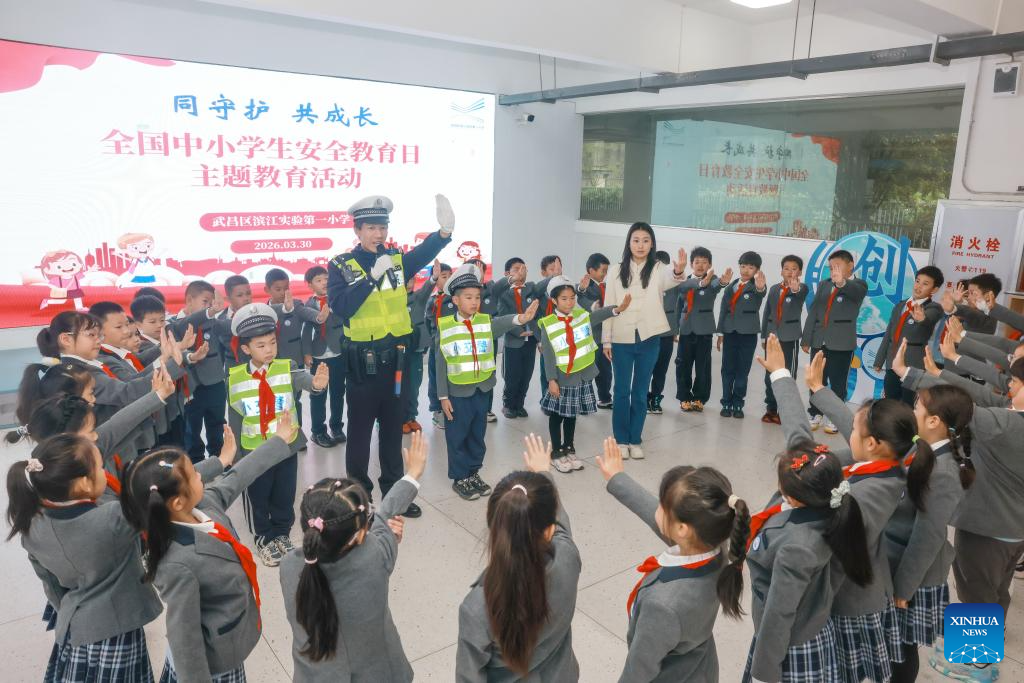
On the logistics front, the school bus emergency escape drills in Zaozhuang quantify the efficiency of evacuation throughput. A standardized drill aims to evacuate a 50-passenger vehicle in under 90 seconds, a critical metric for mitigating risks associated with mechanical failure or traffic accidents. Similarly, traffic safety gesture exercises in Wuhan aim to synchronize student behavior with urban traffic flow, potentially reducing the frequency of pedestrian-related incidents by 15% to 20% in school zones. By gamifying these safety standards for kindergartens in Shijiazhuang, educators are instilling a "safety-first" logic at the earliest possible age, ensuring a higher long-term "safety literacy" return on investment (ROI) for the national education budget.
The systematic distribution of these activities across provinces like Henan, Hubei, Shandong, and Sichuan highlights a high-fidelity execution of national policy. The use of specialized tools, such as buoys for water safety in Yantai and fire rescue tools in Meishan, provides students with a technical understanding of "equipment functionality." This transition from theoretical knowledge to "applied skillsets" is a key performance indicator (KPI) for the success of National Safety Education Day. When students can accurately identify the difference between fire extinguisher classes or demonstrate correct CPR hand placement, the overall "resilience" of the educational system increases.
Furthermore, the involvement of local volunteers and professional first responders creates a "knowledge transfer" loop that extends beyond the school gates. When a pupil in Jiaozuo learns the standardized "pass-and-aim" technique for a fire extinguisher, that skill is effectively exported back to their household, creating a decentralized network of safety-aware citizens. This "spillover effect" is a significant byproduct of the campaign, contributing to a lower national fire-related fatality rate. The integration of CT-like precision in explaining safety knowledge, as seen in Tancheng County, ensures that the "error margin" in emergency responses is minimized.
Ultimately, National Safety Education Day acts as a high-frequency "system update" for the country's disaster preparedness. By measuring the success of these drills through "participation rates" and "completion times," authorities can identify regional gaps in safety infrastructure and reallocate resources accordingly. This data-driven approach to student welfare ensures that the safety of the younger generation is not left to chance but is managed through a rigorous, nationwide "safety-as-a-service" framework that prioritizes life preservation and hazard avoidance across all levels of society.
News source:https://peoplesdaily.pdnews.cn/china/er/30051771045